


VIBES-2.0-VPP
Virtual Power Plant (VPP)
Pilot Program
Harnessing the power of the Virgin Islands distributed energy system (DERS) revolution
Virgin Islands Energy Office
Important Announcement
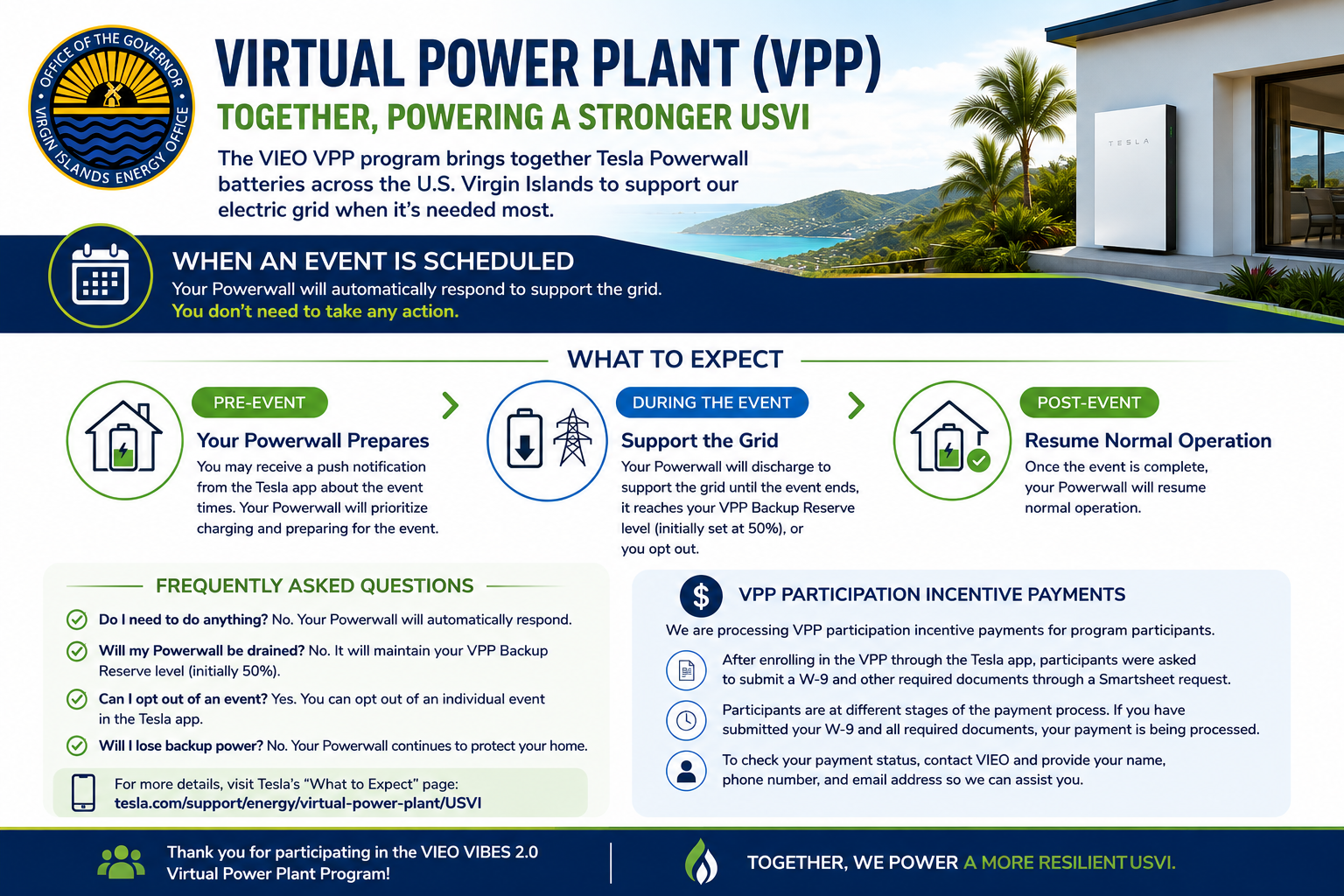
Creating a dispatchable network of distributed battery energy storage systems that can benefit the territorial energy grid is the main goal VIBES-2.0-VPP program.
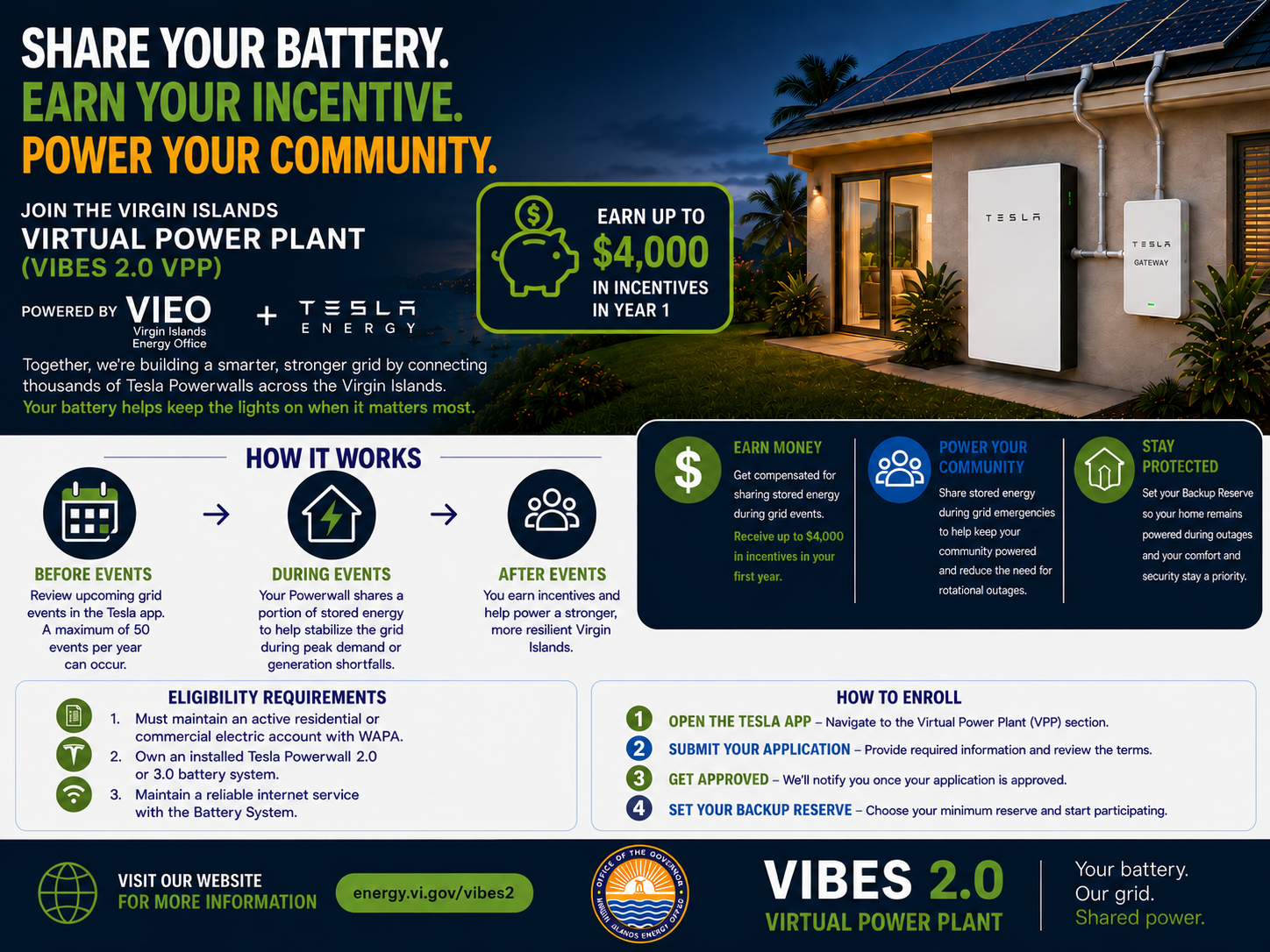
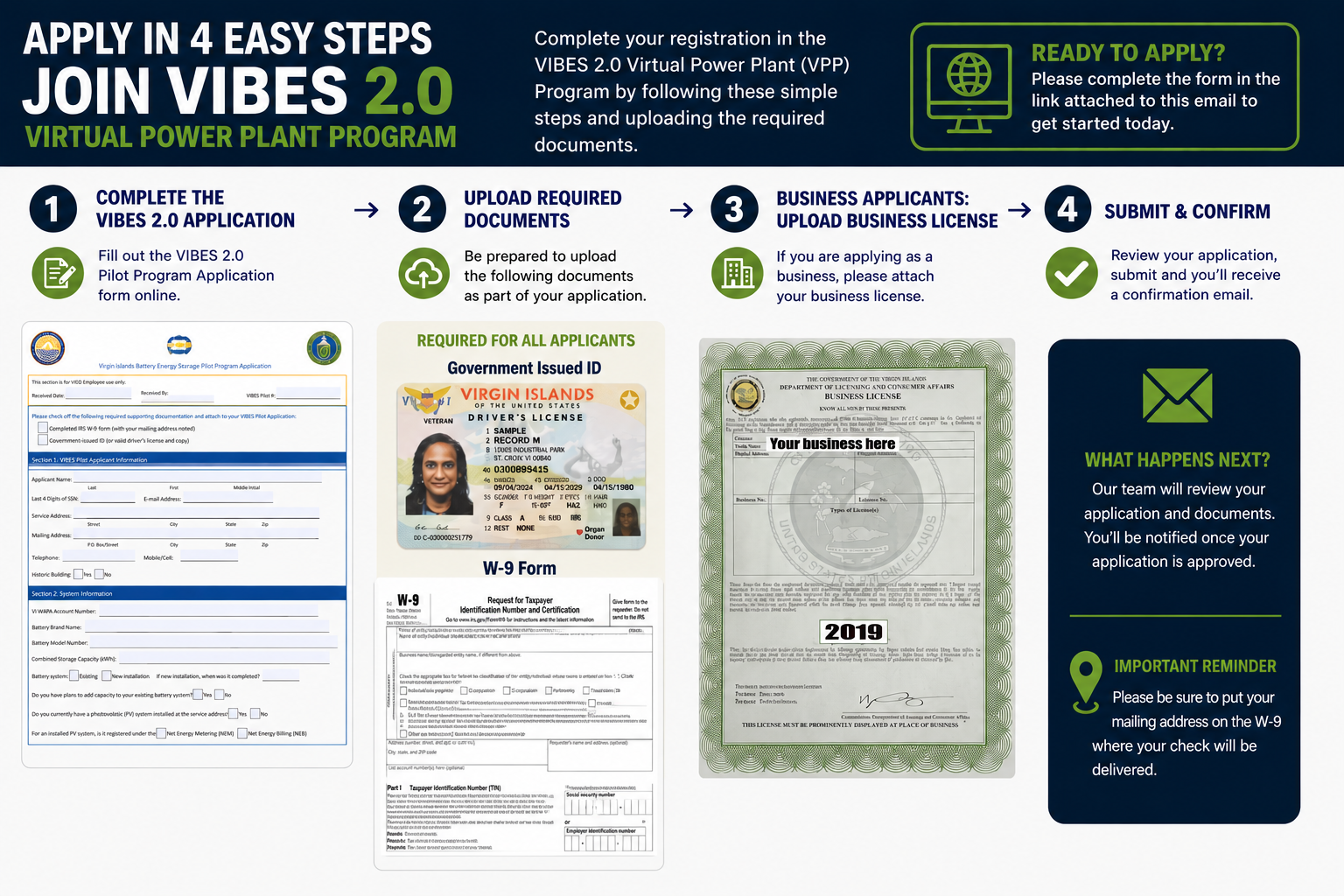
Through the VIBES 2.0 Virtual Power Plant(VPP), residents with home battery systems will be compensated for sharing stored renewable energy to help stabilize the grid and keep the lights on for their neighbors. VIBES 2.0 VPP will offer Virgin Islands residents a cash incentive for enrolling their home battery energy storage systems (BESS) into the program, and further rewards for meeting certain participation milestones. The program will only be open to residents who have enrolled or applied for admission to one or the other of the Virgin Islands Water and Power Authority’s (WAPA) Net Energy Billing (NEB) and Net Energy Metering (NEM) programs, and whose BESS meets the technical requirements necessary for VIBES 2.0 VPP integration.
Program Documents:
Program Documents:
Earn Money
Bank up to $2,000 just for signing up and earn even more through additional payments tied to participation metrics
Stabilize the Grid
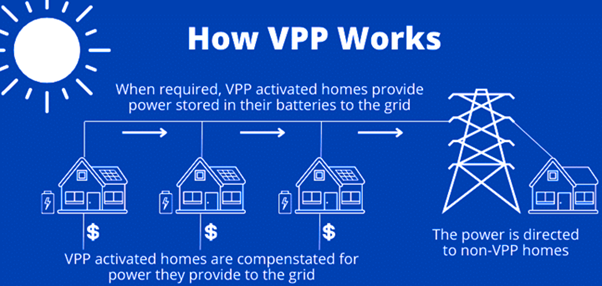
Enrolling in VIBES-2.0-VPP gives you the power to help improve the reliability of electrical service in the territory. By sharing your battery’s excess energy to meet demand, you are helping keep the lights on for your entire community.
You’re in control
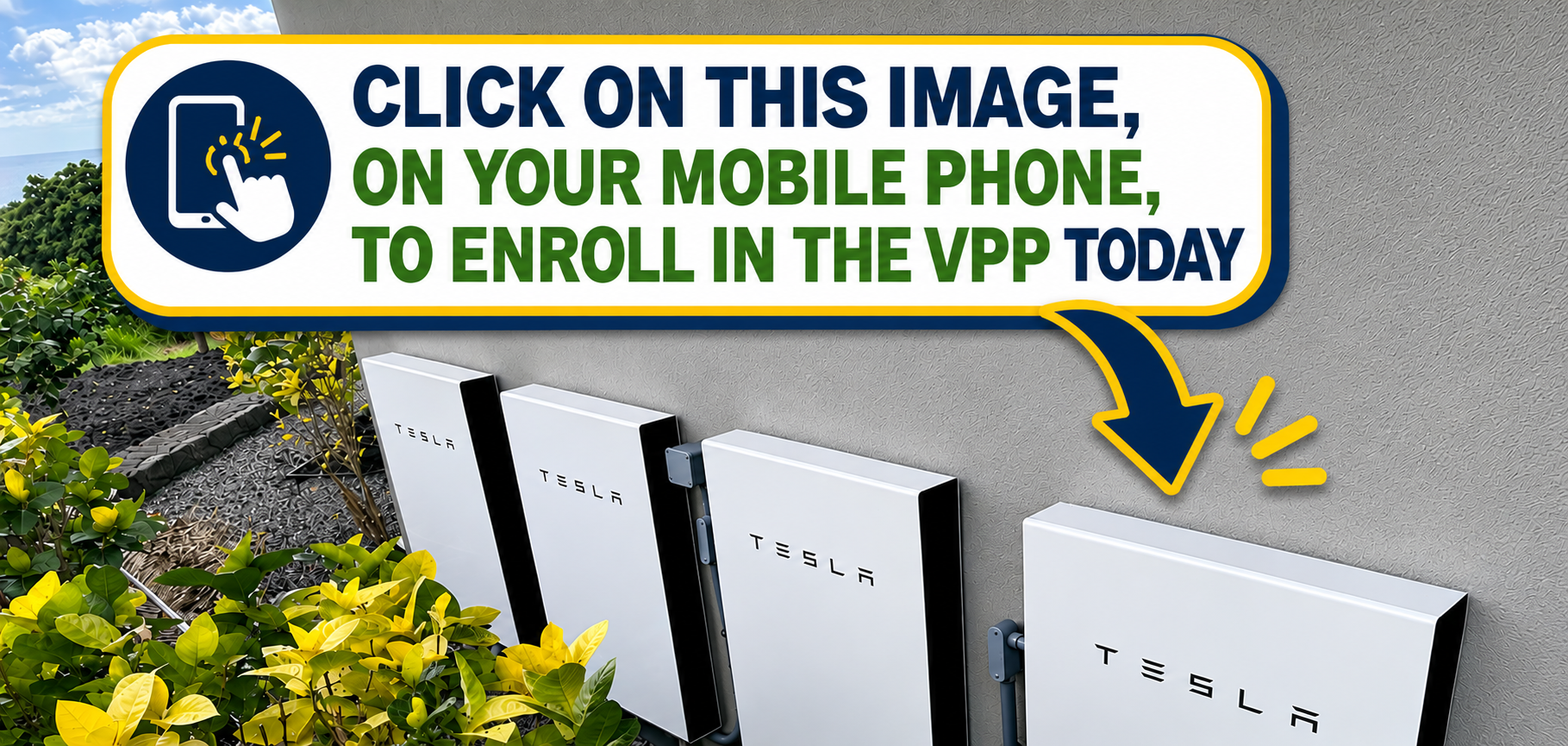
Set your minimum Backup Reserve so Powerwall will keep your home powered during outages.
VIBES-2.0-VPP FAQs
At launch only Tesla power walls will be eligible to participate in VIBES-2.0-VPP
With VIBES-2.0-VPP you are in charge, and can set your batteries so they never discharge below your minimum Backup Reserve.
Yes! You can adjust your Backup Reserve, opt out of events, or stop sharing your energy at any time through the Tesla app.
NEM & NEB simply provide the customer bill credit for extra solar to the grid at random & intermittent times. The VIBES-2.0-VPP is a network of home batteries that share extra stored energy when the grid needs it most, bridging generation shortages and preventing your neighbors from losing grid power.
VIBES-2.0-VPP
Program Objectives
VIBES-2.0-VPP will run for an initial three year period that will allow VIEO to gather important information about ideal program design and develop innovative VPP deployment protocols that will increase the reliability of the grid. During the program VIEO and WAPA will determine strategies to optimize the capabilities of the distributed residential batteries, and utilize them to perform grid stabilizing functions like reducing the amount of fossil generation required to meet the peak energy demands of the Virgin Islands. Data will also be collected that will be used to determine the feasibility of expanding VIBES-2.0-VPP and on how best WAPA can optimize the grid to integrate with a VPP. As the enrolled capacity of VIBES-2.0-VPP increases, WAPA grid operators will gain access to a source of energy currently estimated to stand at 20 MWh territory wide.
What is a VPP
VPPs are not brick and mortar power plants of the kind that Virgin Islanders have become accustomed to. Rather, they consist of widely distributed assets like residential rooftop solar arrays, battery energy storage solutions and other systems that can remotely coordinate with a central command center that actively works to balance demand for energy against supply.
Because they are decentralized, VPPs are extremely flexible, enabling grid operators to better manage upsets like sudden spikes in demand; or instances that cause energy production to fluctuate like cloud cover dropping the production of a solar array. But they don’t only have an impact on reliability. Thanks to their ability to actively marry supply to demand, VPP’s are able to greatly increase the efficiency of a traditional power plant. According to a study VIEO commissioned the Rocky Mountain Institute to undertake in September 2023, a robust territory-wide VPP could save WAPA as much as $22.5 million annually by strategically offsetting fossil fuel use.
Quick Contact
Please let us know if you have any questions our team will be happy to assist.
St. Thomas Office
# 8000 Nisky Center 2nd Floor Ste 208
Charlotte Amalie, VI 00802
Phone: (340) 714-VIEO (8436)
Fax: (340) 776-1914
St. Croix Office
#2 Estate Carlton | Suite 3
Frederiksted, USVI 00840
Phone: (340) 713-VIEO (8436)
Fax: (340) 772-0063